
Echoes #13
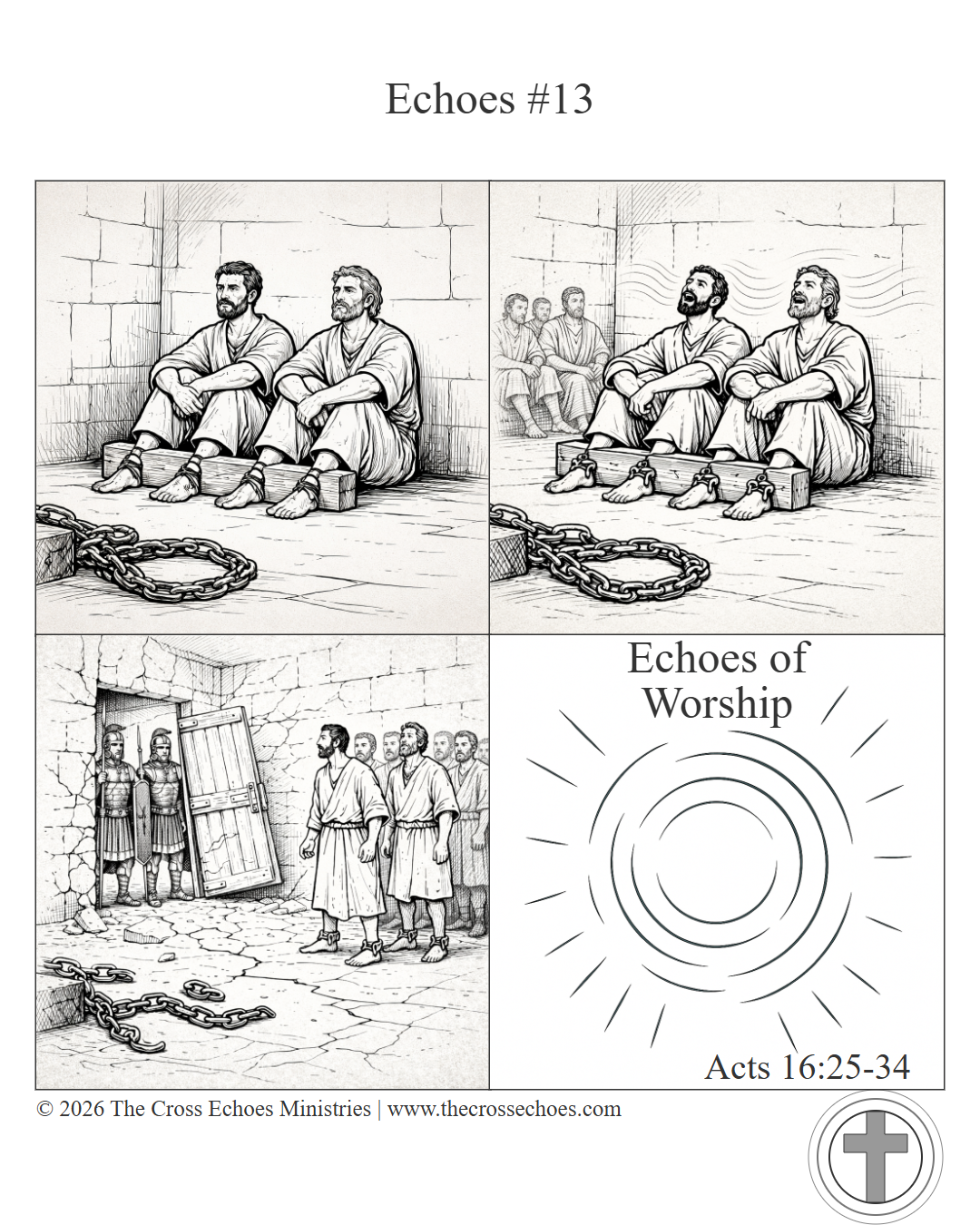
Echoes of Worship
Paul and Silas did not sing because the chains were gone. They sang while the chains were still locked.
Beaten and imprisoned, they were placed in the inner cell with their feet fastened in stocks. At midnight, with no promise of release and no audience to impress, they prayed and sang hymns to God (Acts 16:25–26). Their worship was not a reaction to freedom; it was a declaration of allegiance. Jesus Christ was still Lord, even here.
Then the prison shook. Doors flew open. Chains fell loose. But the story does not end with escape.
The jailer awoke in terror, assuming the prisoners had fled. Roman justice allowed no mercy for a failed guard. Death seemed inevitable. Yet Paul cried out, stopping him from taking his own life. Though the doors were open, the prisoners remained. Worship had already reordered their understanding of freedom.
The man who had locked them in now fell before them, trembling, and asked the only question that mattered: “What must I do to be saved?” (Acts 16:30–31). The answer was not found in the earthquake, but in the risen Christ.
That night, the jailer washed the wounds of the men he had bound. He and his household heard the word of the Lord, believed, and were baptized. The prison that once held chains became a place of rejoicing.
Worship did not merely break iron. It broke fear. It broke despair. It broke open a heart.
True worship does not aim at escape. It bears witness. When Christ is honored in suffering, even prisons become pulpits, and even captors can become brothers.
There are echoes of worship that still break chains.